

To interview or not to interview? A science communication dilemma
What do you do when the phone rings at 06:57 a.m. and it's the BBC Radio 4 Today programme asking if you can talk about some new research that's not your own, in about 20 minutes time?
That was my start to the day, and it's something we cover in SciConnect Ltd's media skills training.

In this case it was about a research paper with some new insights into how sperm whales communicate. As the paper's authors were in the US, fast asleep with the time difference, they wanted someone who could provide "independent comment" instead.
Providing independent comment in the media is about helping people to make sense of an interesting new finding; it isn't the same as peer-reviewing a research paper.
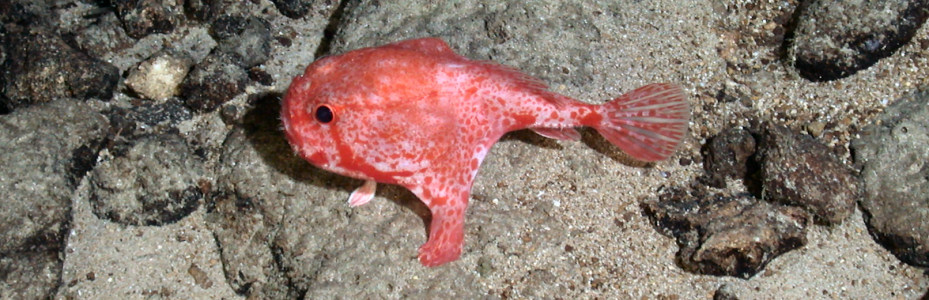
My own whale-related research concerns their after-lives as whale-falls on the ocean floor. But because I also do wider ocean-science communication, I sometimes get called about other things in the news.
It's always a personal judgement whether or not to do it, when it's not your own research or not exactly your field. My default is to pass it on where possible, as I think it's good to get more voices in the media. So in these situations I usually try to hook up the producer with someone whose research is more directly related to the subject.
But for this topic, the other researchers I know are also in the US, and the programme wanted to do the item in 20 minutes time, otherwise they'd probably drop it, skipping an opportunity for some marine science in mainstream news.
So the next question is: do I know enough about this topic to help put it in some useful context for the audience?
I felt comfortable enough to provide some basic context because it's a topic that I cover in my teaching for first-year marine biology undergraduates, and I had read the new research paper when it came out the day before. So on this occasion I was willing to do it, in the absence of anyone else being available.
The item had a good factual intro explaining the new finding, which thereby allowed us to explore some wider context in our chat. For example, how sperm whales make sounds in a different way to how we talk, because they're holding their breath while they do it.
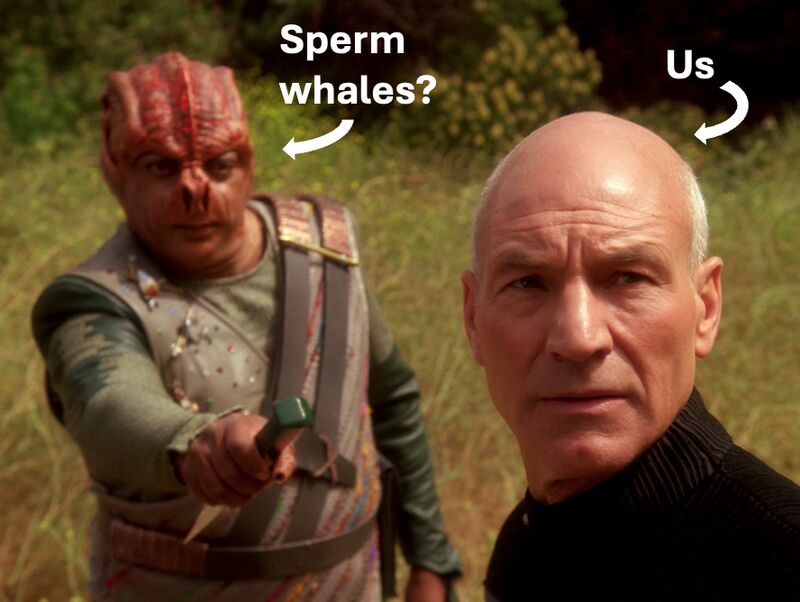
I also have some personal views on interspecies communication, which I was able to allude to at the end. When I was advising The Swarm science-fiction series, we had to come up with a credible way for some scientists to establish a form of dialogue with an undersea intelligence using acoustic communication, without understanding the actual information content of their messages (using "echolalia with a twist", but that's another story).
As we also cover in our media skills training, doing one interview can sometimes be the start to a potentially busy day. If your interview comes across ok in one national media outlet, other news programmes may also want to interview you. In this case, I ended up talking about that new research later on BBC World Service Newshour and the BBC News channel. But by then, the paper's authors should be available to talk about their own work.
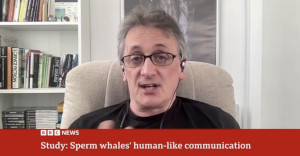
Jon Copley, April 2026
| Previous | Index | Next |